I want to share something that has been sitting heavily with me.
Supporting someone with MND is brutal. There is no soft way to say it.
Since Shane’s diagnosis, we have watched this disease take things piece by piece.
First his voice.
He lost his ability to speak and now communicates using a small whiteboard.
He had to stop working a job he genuinely loved. Dreams he and Mum had for retirement travel plans were shattered. He had to stop doing the everyday things that brought him joy and purpose.
Seventeen years he gave to his employer. He worked Christmas and Easter every year so others could be with their families. He showed up consistently.
When he was diagnosed with Motor Neurone Disease and could no longer work, the silence from his workplace was loud.
- No card.
- No acknowledgement.
- No simple “thank you for your years of service.”
Perhaps people did not know what to say.
But saying something imperfect in moments like this is always better than saying nothing at all.
Then his ability to eat and drink was taken. He is now 100 percent PEG fed.
Now it is starting to take his ability to walk, and the strength in his hands is fading.
MND does not pause. It does not negotiate. It does not give you time to adjust before it takes the next thing.
Supporting someone with MND is relentless. It takes voice. Mobility. Independence. Work. Plans. Identity.
And alongside the disease, something else often happens.
People disappear.
Some say it is too upsetting to see his decline. Some say they do not know what to say. Some worry they will get emotional.
I understand that. I truly do.
It is confronting. It is unfair. It is heartbreaking.
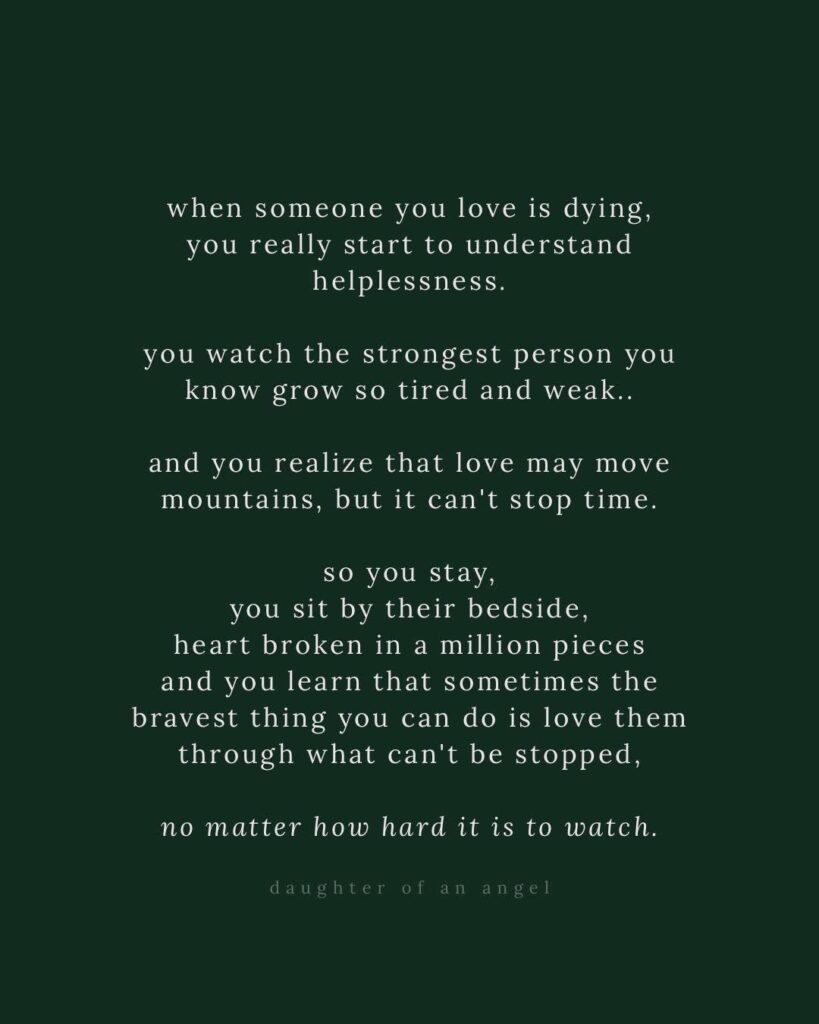
Watching someone decline is hard. Living it is harder.
But we live this EVERY. SINGLE. DAY.
Mum lives it every hour. Being a carer in this space is not just physically exhausting, it is emotionally relentless. It is watching the person you love lose their independence. It is managing feeding tubes, appointments, equipment, paperwork, night time routines, and still somehow trying to hold yourself together. It is carrying grief while the person you are grieving is still sitting beside you.
And when friends or colleagues quietly step away, the isolation becomes another layer of loss.
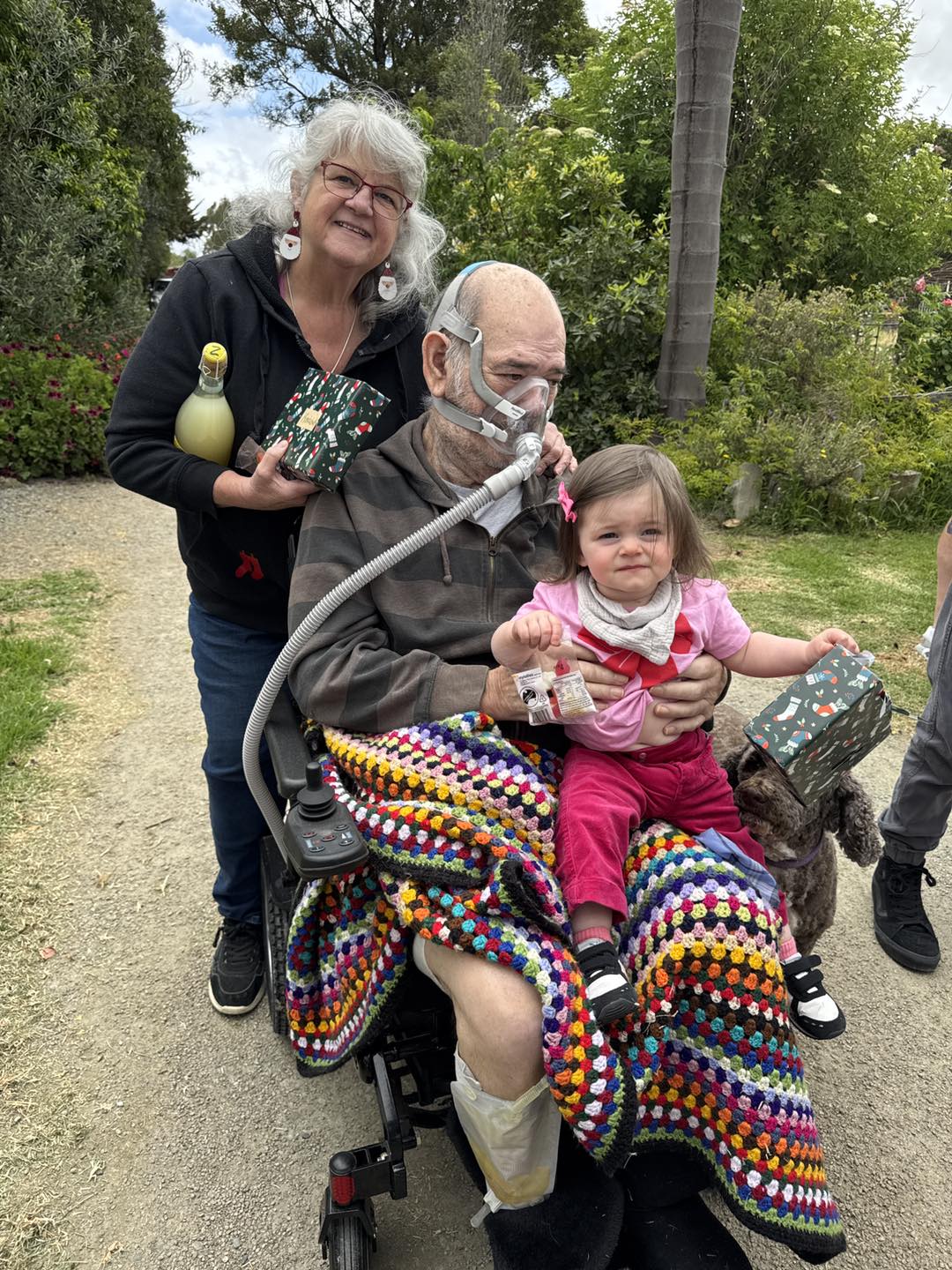
Shane is still Shane. His sense of humour is still there. His mind is still sharp. He is not a disease. He is a person navigating something horrific with courage and grit.
- If you are worried you will cry, that is okay.
- If you do not know what to say, “I don’t know what to say” is perfectly fine.
- Saying nothing awkward is fine. A hug is fine. Disappearing is not fine.
If you feel uncomfortable reading this, I understand that too.
But maybe that discomfort is the very reason to reach out.
To us. Or to someone else walking a road like this.
What is harder than tears or awkwardness is silence.
And please hear this part clearly.
- It does not have to be a big visit.
- It does not have to be hours.
- A five minute stop in to say hello is enough.
- A quick check in. A coffee. A sit on the couch. That is enough.
Even a quick text to say hello matters.
A phone call to Mum. A message to Shane. He cannot speak, so text is best for him.
It does not have to be some big grand gesture.
Presence matters more than perfection.
A small number of incredible humans have shown up consistently. They check in. They visit. They sit. They laugh. They cry. They treat Shane like Shane. To those people, thank you. You are helping carry weight you may not even realise you are carrying.
To everyone else, it does not matter what has or has not happened so far.
We are still here.
Please do not let fear of saying the wrong thing stop you from saying anything.
Come and say hello. Send a text. Make a call. Come and sit. Come and laugh. Come and cry.
Just do not disappear.
MND already takes enough.